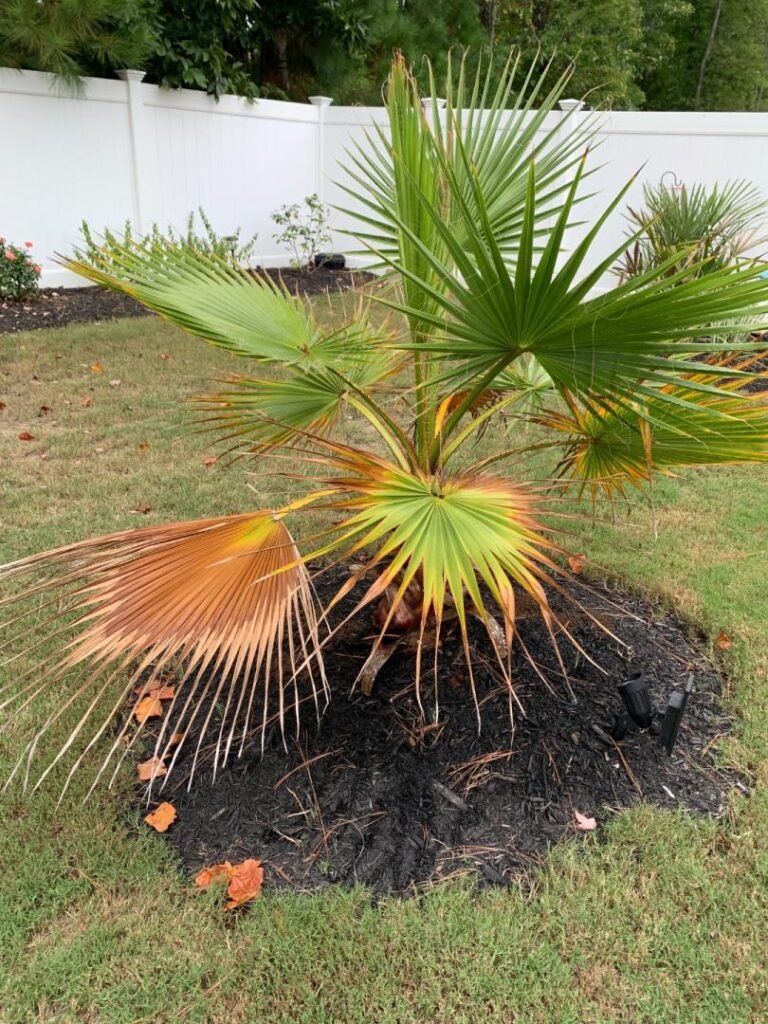
After a Florida freeze, palm trees can quickly develop brown, wilted, or damaged fronds. While they may look dead, palm tree freeze damage doesn’t always mean the entire tree has died.
1. Brown Fronds Don’t Always Mean a Dead Palm
Cold temperatures can damage palm fronds while leaving the tree’s growing point alive. A palm may look unhealthy but still recover once warmer weather returns.
2. Give Your Palm Time to Recover
Different palm species handle cold differently. After a freeze, wait for warmer weather and watch for new growth before deciding how much pruning is needed.
3. Don’t Trim Too Early
Immediate palm trimming in Florida can remove fronds that are still helping the tree. Cutting too aggressively can also damage healthy tissue and create additional problems.
4. When to Trim Palm Trees
So, when to trim palm trees after a freeze? Wait until the damage is clear and new growth begins. Dead fronds can then be carefully removed without disturbing healthy parts of the palm.
5. When to Call a Professional
Professional help may be needed if the center spear pulls out easily, the crown is collapsing, the trunk has serious damage, or the palm isn’t showing signs of recovery.
6. Avoid Common Freeze-Damage Mistakes
The biggest mistake is pruning too quickly. Don’t remove healthy fronds, cut into the crown, or assume every brown leaf means the palm is dead.
Protect Your Palms After a Freeze
For proper palm tree care in Polk County, patience is often the best first step. Give your palm time to recover, and have severe damage professionally evaluated before making major cuts.
Need help with palm trimming or tree care in Polk County? Timber Gator Tree Trimming can help you determine the safest next step for your palms.